Stock code: 601677
Stock code: 601677
To fully grasp the benefits of 6061 aluminum plate T6 temper, it helps to start with its metallurgical foundation. 6061 is an Al‑Mg‑Si (aluminium‑magnesium‑silicon) alloy from the 6xxx series, which is heat‑treatable. The T6 temper involves a complete sequence: solution heat treatment at around 530°C, rapid water quenching to lock the dissolved elements in place, and then artificial aging at about 175°C to precipitate fine strengthening particles. This process delivers a well‑balanced combination of strength, corrosion resistance, weldability, and machinability – making it one of the most widely used medium‑strength aluminium alloys in industry.
– High strength with good toughness
Tensile strength exceeds 310 MPa, with a yield strength around 276 MPa – significantly higher than 5xxx series grades like 5052 (which offer 210–260 MPa). At the same time, it retains 8–12% elongation, so you get strength without brittleness.
– Excellent machinability
Moderate hardness means low cutting resistance, and operations like turning, milling, drilling, and tapping are smooth and stable. The T6 heat treatment also relieves some internal rolling stresses, resulting in good flatness and less distortion during precision CNC work, including extended milling, boring, and pocketing.
– Good corrosion resistance and weldability
The alloy performs well in atmospheric and fresh‑water environments. It can be welded reliably using TIG or friction‑stir methods, with stable weld formation and minimal softening or cracking in the heat‑affected zone. Among high‑strength aluminium alloys, 6061 is recognised for its superior weldability.
– Light weight and cost efficiency
Density is only 2.70 g/cm³ – about one‑third that of steel. Raw material costs are far lower than for 7075 and other higher‑strength alloys, and its machining efficiency reduces tool wear and processing time.
– Tooling & moulds – injection, blow, rubber, and shoe moulds, as well as jigs and inspection fixtures, benefiting from dimensional stability and good cutting behaviour.
– Machinery & automation – CNC fixtures, equipment frames, guide rails, work platforms, and robotic connectors.
– New energy vehicles – battery trays, motor housings, control‑unit enclosures, and chassis components, where high specific strength protects battery cells and good thermal conductivity aids motor cooling.
– Transportation – railcar bodies, automotive suspension parts, and undercarriage elements.
– Consumer electronics & heat dissipation – heat sinks, electronic chassis, mobile‑phone brackets, and computer supports.
– Aerospace – light structural parts, precision tooling, and avionic equipment housings.
– Thin sheets (0.3–6 mm) – used for lightweight electronic covers and heat‑sink fins.
– Medium plates (6–100 mm) – common in automation frames, fixtures, mould bases, and automotive structural parts.
– Thick plates (100–200 mm) – suited for large machine beds and heavy equipment bases.
– Extra‑thick plates (200–600 mm) – reserved for specialised heavy‑duty industrial foundations and large‑scale tooling blanks.
|
Temper |
Process |
Core Advantage |
Best For |
|
T4 |
Solution + natural ageing |
High formability, good ductility |
Complex bending, deep drawing, or extensive welding |
|
T6 |
Solution + artificial ageing |
High strength and rigidity |
Load‑bearing structures, moulds, general CNC parts |
|
T651 |
T6 + pre‑stretching (1–3% to relieve stress) |
Minimal internal stress, excellent dimensional stability |
High‑precision machining where distortion after cutting is not acceptable |
T6 and T651 have identical strength and hardness. The only difference is internal stress – T651 undergoes an extra stretching step that releases residual tension, so it resists warping during large‑area milling.
Selection tip: Choose T4 if forming is the priority; pick T6 for standard load‑bearing and tooling; opt for T651 when tight tolerances and post‑machining flatness are critical.
6061‑T6 performs reliably across a wide temperature range, from –196°C to 150°C. The surface can be anodised or otherwise treated to improve corrosion resistance and appearance – though we do not offer such finishing ourselves. For projects with strict thickness tolerances or extensive cutting, T651 is the recommended starting point.
Overall, the benefits of 6061 aluminum plate T6 temper come down to a rare balance: enough strength for demanding structures, easy machinability, good weldability, and a cost structure that makes it a practical first choice for countless engineering applications.
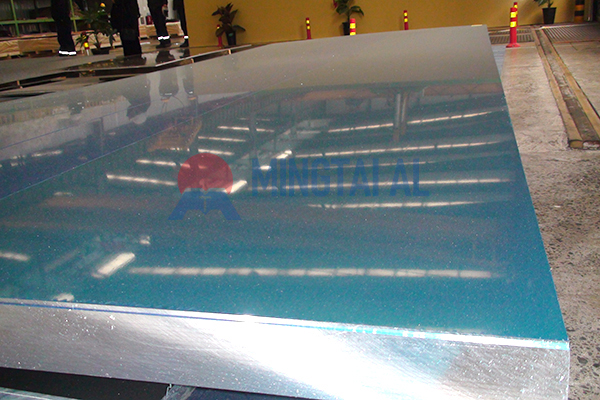
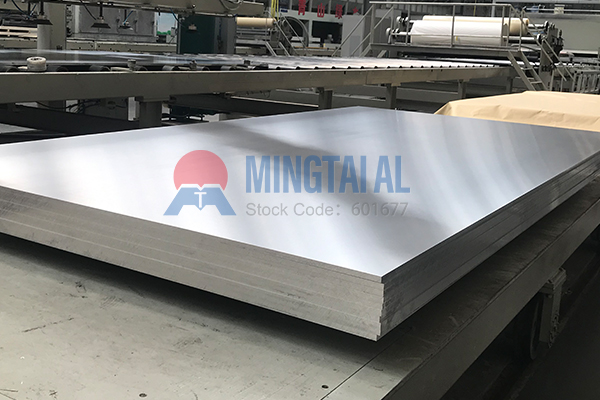
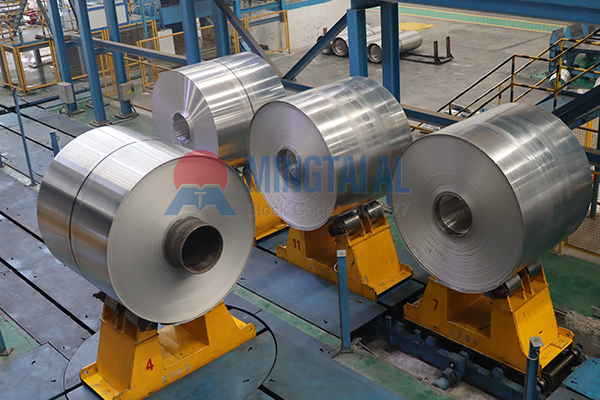
As a manufacturer with nearly 30 years of aluminium processing experience, Mingtai Aluminum supplies 6061‑T6 plates from 0.3 mm to 600 mm thick, complying with Chinese, ASTM, and EN standards.
Q: What is the maximum service temperature for 6061‑T6?
A: It performs well from –196°C to 150°C, maintaining stable properties across that range.
Q: What is the difference between T6 and T651?
A: T651 adds a pre‑stretching step to T6, which reduces internal stress for better dimensional stability – strength and hardness are unchanged.
Q: Does welding reduce the strength of 6061‑T6?
A: Yes, some local softening occurs in the heat‑affected zone, but 6061 still offers one of the best weldability profiles among high‑strength aluminium alloys.
Q: What is the maximum thickness available?
A: Standard thickness ranges from 0.3 mm to 500 mm, with extra‑thick tooling plates up to 600 mm on request.