Stock code: 601677
Stock code: 601677
In beverage, pharmaceutical, cosmetics, and liquor packaging, aluminum tamper-evident caps are valued for sealing reliability, tamper resistance, and recyclability. At the center of this packaging format is 8011 aluminum for bottle caps — a practical base material for caps that must be formed, threaded, coated, and opened cleanly. This guide explains why 8011 foil is widely used, how H14 and H16 tempers differ, and what to consider when selecting material for high-speed cap lines.
When specifiers look for 8011 aluminum for bottle caps, they are usually trying to solve a practical problem: the foil must form cleanly, hold its shape, and accept coating without slowing down the line.
8011 is an 8xxx-series aluminum-iron-silicon alloy. Each element plays a role:
– Iron helps refine the grain structure and add strength.
– Silicon improves rolling flow and deep-drawing behavior.
– Controlled impurities keep the material suitable for food, beverage, and pharmaceutical packaging.
For bottle caps, hot-rolled 8011 foil is often the preferred starting point. It begins with a large ingot, and the hot-rolling process produces a more uniform grain structure than cast-rolled stock. That uniformity matters in deep drawing, necking, thread rolling, and tamper-evident ring formation. A more consistent material means fewer cracks, less wrinkling, and more even wall thickness.
– Long caps and deep-drawn closures
– Tamper-evident designs with a reliable break point
– High-speed stamping lines that need stable feeding and forming
Cast-rolled foil still has a place. It costs less, but its grain structure is less uniform. It is better suited to simple, shallow caps. When the cap design demands deeper drawing or tighter dimensional control, hot-rolled 8011 is usually the safer choice.
The temper you choose changes how 8011 aluminum for bottle caps behaves during stamping — and how the finished cap performs after it is tightened.
|
Temper |
Material character |
Best-fit applications |
|
H14 (1/2 hard) |
Balanced strength and ductility; good drawing behavior; less springback |
Wine caps, liquor tamper-evident caps, oral liquid aluminum caps |
|
H16 (3/4 hard) |
Higher strength and rigidity; better thread stability after forming |
Beverage caps, thicker pharmaceutical caps, premium cosmetic caps |
H14 gives production lines a wider processing window. It draws well and keeps scrap risk lower in standard cap designs.
H16 is the choice when the cap needs more rigidity. The thread holds its shape better, and the tamper-evident ring can break more consistently under the intended torque.
A simple way to decide:
– Choose H14 when formability matters most.
– Choose H16 when stability, thread strength, and anti-deformation performance matter most.
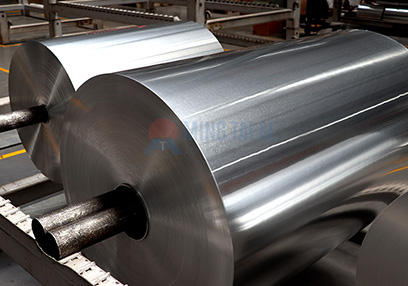
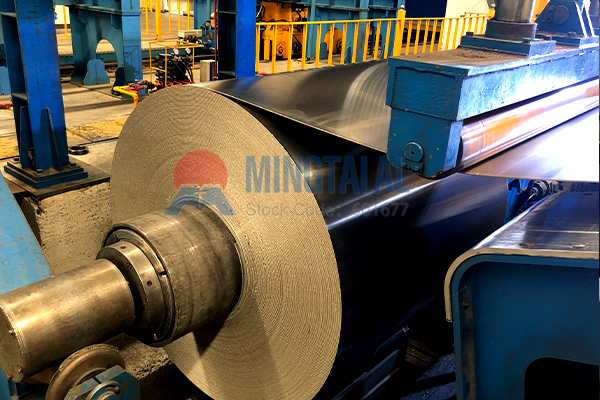
8011 bottle cap foil is normally supplied as coils or sheets. The right choice depends on your forming equipment and line layout.
– Support continuous unwinding on automated lines
– Inner diameter, coil weight, and slitting pattern can be customized
– Cut to suit specific forming equipment
– Useful for certain stamping setups or trial production
Thickness is selected according to cap depth and application. Thinner stock suits shallow caps; thicker stock gives more rigidity for deeper caps, pharmaceutical closures, or pressure-resistant designs. Width can be slit to match the cap line, and tolerances should be controlled to keep feeding stable and avoid deviation on high-speed presses.
Cap stock needs a flat, clean surface. Oil stains, scratches, black lines, and pinholes can cause coating defects or line interruptions. Uniform surface tension helps rolling coatings, printing inks, and DOS lubricants bond properly.
For export-oriented or high-end cap programs, chromate conversion treatment is sometimes added. It is not a simple physical coating. The cleaned aluminum surface reacts with a chromate solution to form an extremely thin conversion film. The main purpose is to improve paint adhesion and corrosion resistance while keeping the surface stable for later processing.
A typical chromate line includes:
1. Degreasing and water rinsing
2. Activation or brightening
3. Chromate conversion reaction
4. Multi-stage pure water rinsing
5. Drying
Because chromate treatment adds cost, it should be selected according to the cap’s end use, coating system, and market requirements — not added by default.
Aluminum cap production is a continuous, high-speed process: unwinding, cutting, deep drawing, necking, thread rolling, tamper-evident ring formation, internal and external coating, drying, and inspection. The material must support all of these steps without becoming a bottleneck.
Uniform grain structure and weak anisotropy help reduce earring. In practice, this means fewer cracks, less wrinkling at the mouth, and more even wall thickness after forming. Threads form more clearly, and production lines experience fewer stops for material-related issues.
Properly controlled 8011 foil is non-toxic, odorless, and suitable for contact with sensitive contents. It can withstand sterilization and pasteurization processes when the full coating and processing system is designed correctly.
Aluminum provides an effective barrier against light, oxygen, and moisture. This helps slow oxidation in liquor, prevent pharmaceutical products from absorbing moisture, and protect flavor and aroma. It is one reason aluminum caps remain preferred over plastic closures in many premium applications.
After forming, 8011 caps need enough rigidity to fit the bottle neck tightly and seal without leakage. The tamper-evident ring must break at the intended torque — not too early, not too late. Temper selection and consistent material properties are central to achieving that behavior.
A clean aluminum surface accepts primer, topcoat, and printed designs. Good adhesion means less flaking and better shelf appearance. Aluminum is also recyclable, which supports packaging sustainability goals.
Before finalizing an order, match the material to the cap — not the other way around. Review the drawing depth, thread design, tamper-evident torque, coating process, sterilization requirements, and export standards. Then confirm alloy, temper, thickness, width, surface treatment, and packing method.
What is 8011 aluminum used for in bottle caps?
It is used as the formable, coatable base material for tamper-evident and sealed aluminum caps.
Which temper is better, H14 or H16?
H14 is better for formability; H16 is better for rigidity and thread stability.
Is hot-rolled 8011 better than cast-rolled?
For deep-drawn and tamper-evident caps, hot-rolled 8011 usually gives more uniform forming behavior.
Why is chromate treatment used?
It improves coating adhesion and corrosion resistance.
Can the foil be supplied in custom widths?
Yes, coils and sheets can be slit or cut to suit the cap line.
For export-ready 8011 aluminum for bottle caps, Mingtai Aluminum supplies hot-rolled H14 and H16 foil with controlled surface quality, custom slitting, and coating-ready options. Share your cap design and line requirements, and the team can help match the right material specification.