Stock code: 601677
Stock code: 601677
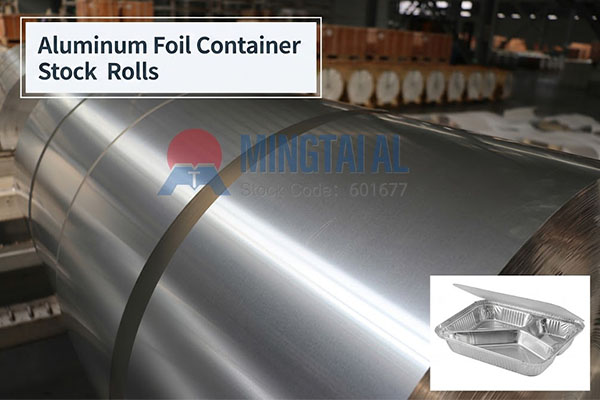
Food packaging manufacturers rely on high-quality aluminum foil container stock rolls to produce trays, lunch boxes, baking pans, takeaway containers, and other disposable packaging products. The performance of the raw material directly influences forming efficiency, finished product quality, and production consistency. Selecting the right foil stock is therefore an important step in achieving reliable manufacturing results.
Not every aluminum foil product is suitable for container production. Materials intended for deep drawing and forming applications must meet stricter requirements in terms of thickness control, surface quality, and mechanical properties.
Container manufacturing grade foil is designed to provide:
* Good formability during stamping and shaping
* Consistent thickness throughout the coil
* Smooth and clean surfaces
* Stable mechanical performance from batch to batch
* Reliable performance in high-speed production lines
These characteristics help maintain efficiency while reducing the risk of defects during processing.
When comparing foil stock for container applications, several technical factors deserve attention.
1. Alloy Selection
Different alloys offer different balances of strength and formability. The appropriate choice depends on the design of the final container, required rigidity, and production process.
For many food container applications, 3004 aluminum foil and 8011 aluminum foil are widely selected for their good formability and processing stability.
2. Thickness Range
Foil thickness affects both container strength and material consumption. Thinner gauges may reduce weight, while thicker materials can improve structural stability.
3. Coil Width
Coil width should match equipment requirements and container dimensions. Accurate width control helps improve production efficiency and minimizes material waste.
4. Surface Condition
A high-quality surface contributes to smooth forming and supports subsequent processes such as coating, printing, or lamination when required.
5. Coil Consistency
Uniform properties across the entire coil help maintain stable machine settings and reduce interruptions during continuous production.
Container production involves stretching and shaping the material into various forms. Poor formability may lead to cracking, excessive wrinkling, or uneven edges.
A well-designed foil stock should provide:
* Smooth material flow during forming
* Good resistance to edge cracking
* Stable performance under high-speed operation
* Consistent container dimensions
These advantages contribute to higher production efficiency and more predictable manufacturing outcomes.
Container-grade foil stock is widely used across the food packaging industry. Typical applications include:
Food Service Packaging
Disposable meal containers, takeaway boxes, and catering trays require reliable forming performance and attractive appearance.
Baking and Cooking Containers
Aluminum baking pans and oven-ready trays benefit from excellent shape retention and structural strength.
Retail Food Packaging
Prepared food packaging often requires materials that combine lightweight characteristics with dependable performance.
Airline and Institutional Catering
Large-volume food service operations frequently use aluminum containers because of their practicality and convenience.
Features That Support Efficient Production
Modern packaging facilities often operate automated equipment at high speeds. Material stability becomes increasingly important under these conditions.
The following characteristics are commonly associated with efficient production:
1. Consistent mechanical properties
2. Flat coil profile
3. Accurate dimensional tolerances
4. Clean surface finish
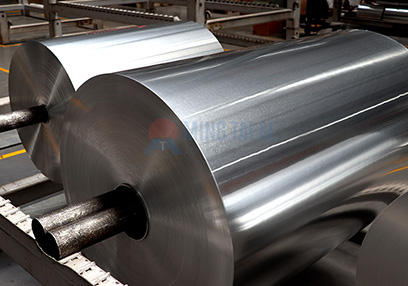
5. Reliable coil winding quality
Together, these factors help reduce downtime and support continuous manufacturing operations.
Beyond material specifications, supply capability also plays a significant role in long-term production planning.
Consider evaluating:
* Production capacity
* Quality control systems
* Custom specification support
* Delivery reliability
* Technical documentation availability
A supplier capable of maintaining consistent quality over multiple orders can contribute to smoother manufacturing performance and better operational planning.
Material cost remains an important consideration, but production efficiency can have an even greater impact on overall operating expenses. Stable foil stock helps reduce scrap rates, supports smoother machine operation, and improves finished product consistency.
For container manufacturers, dependable material performance often translates into lower production risks and more predictable results.
Container manufacturing requires more than standard foil products. The right material combines formability, dimensional accuracy, surface quality, and consistency to support efficient production. By evaluating specifications carefully and choosing a reliable supplier, manufacturers can improve both productivity and finished product quality.
Mingtai Aluminum supplies container-grade aluminum foil stock with stable quality and comprehensive manufacturing capabilities. For food packaging projects, Mingtai offers dependable material solutions tailored to industrial production requirements.
What are aluminum foil container stock rolls used for?
They are primarily used to manufacture food containers, trays, takeaway boxes, baking pans, and similar packaging products.
Why is formability important for container production?
Good formability helps prevent cracking and wrinkling during stamping and shaping processes.
What specifications are most important when selecting foil stock?
Key factors include alloy, thickness, width, surface quality, and coil consistency.
How does material consistency affect production?
Consistent material properties help maintain stable processing conditions and improve production efficiency.