Stock code: 601677
Stock code: 601677
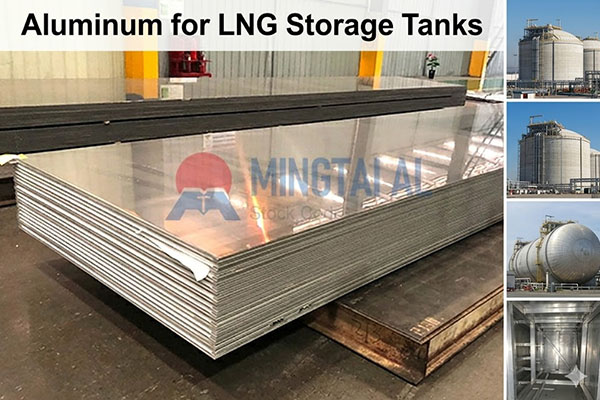
Liquefied natural gas (LNG) must be stored at an extremely low temperature of -162°C. The inner tank material faces severe challenges: it must resist low-temperature brittleness, handle drastic thermal cycles, and avoid stress corrosion and welding failures. Steel tanks are strong, but they are heavy and require complex post-weld heat treatment. Aluminum for LNG storage tanks offers natural corrosion resistance, very low density, and excellent low-temperature toughness. Among all aluminum alloys, 5083 is used far more than any other. It has become the industry standard.
For LNG service, aluminum has three clear advantages:
– Toughness improves as temperature drops. Aluminum has a face-centered cubic structure. It does not become brittle at low temperatures. When the temperature falls from room level to -162°C, its tensile strength actually increases noticeably, and elongation remains good. In contrast, ordinary carbon steel can become brittle at just a few tens of degrees below zero.
– Natural corrosion resistance. The dense oxide film on aluminum requires no coating. It can resist impurities in LNG (such as H₂S and moisture) and marine atmosphere corrosion. This eliminates leakage risks caused by coating failure.
– Light weight. For the same volume, aluminum weighs about one-third as much as steel. A large inner tank using aluminum can reduce weight by hundreds of tons. This significantly cuts costs for foundations, insulation, and support structures.
5083 is an Al-Mg alloy with carefully controlled chemistry: magnesium around 4.5% and manganese about 0.7%. This composition brings three key benefits.
First, it is not heat-treatable – and that is a great advantage for welding.
5083 gains its strength from solid solution and work hardening, not from heat treatment. That may sound less advanced, but it is a huge benefit during field welding of storage tanks. The heat-affected zone does not suffer from over-aging softening. Weld strength remains very high. By comparison, heat-treatable alloys like 6061 lose significant strength after welding, and most require post-weld solution and aging – which is nearly impossible to do on a 50‑meter‑high tank in the field.
Second, its resistance to stress corrosion cracking (SCC) has been proven for decades.
Early Al-Mg alloys with too much magnesium could form grain boundary precipitates at moderately elevated temperatures, leading to SCC. 5083 keeps magnesium within a safe range and uses stabilized tempers like H112, H116, or H321 to eliminate this risk. In LNG terminals worldwide, aluminum inner tanks have operated for over 40 years without SCC‑related failure.
Third, its strength is outstanding among similar alloys.
Compare common Al-Mg alloys: 5052 has lower strength and is only suitable for small cold containers. 5086 has medium strength and is often used in shipbuilding, but large LNG tanks need higher wall strength. 5083 offers higher strength and can be produced in very thick plates. It fully meets the graded design requirements from bottom to upper shell courses.
– 5052: Not strong enough for bottom hydrostatic pressure.
– 5086: Close but slightly lower in strength and creep resistance; gradually replaced by 5083.
– 5456: Magnesium content is a bit too high. There is a risk of stress corrosion cracking during warm‑up after long low‑temperature service. Standards generally do not recommend it for primary LNG containers.
– 6061: The heat‑affected zone softens severely after welding, and its low‑temperature toughness is clearly worse than 5083.
– Bottom plate of the inner tank: Bears full hydrostatic pressure and the most severe thermal stress. Uses thick plates in H112 or H321 temper.
– Shell courses: The lowest course carries the highest load and uses thicker plates. Upper courses use progressively thinner plates.
– Secondary barrier in membrane tanks: Uses very thin corrugated 5083 sheets (often 0.8‑1.5 mm). Requires high elongation and fatigue life.
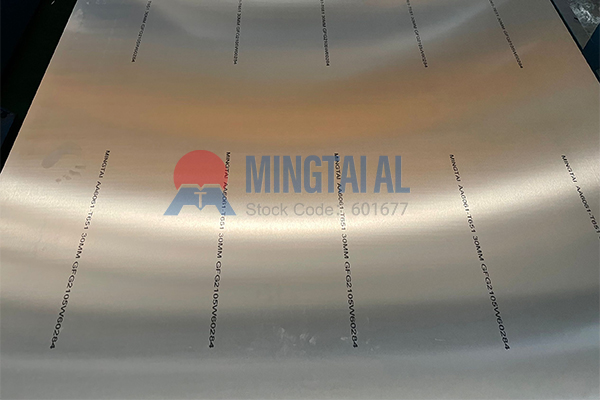
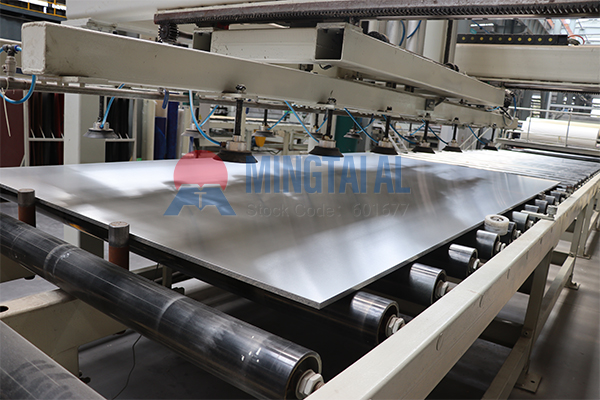
Low‑temperature impact toughness is the core acceptance criterion for 5083 plates. A mill test certificate must be provided. Classification society approvals (ABS, BV, LR, etc.) are not mandatory for every project, but almost all large EPC projects require them. Thickness tolerance and flatness directly affect field automatic welding efficiency – these are also key factors when selecting a supplier.
For reliable 5083 plates that pass low‑temperature impact tests and offer high batch‑to‑batch consistency, Mingtai Aluminum provides a full range of hot‑rolled and stabilized tempers to meet the strict low‑temperature toughness and classification society requirements of LNG tank projects. When you choose aluminum for LNG storage tanks, make sure the material has proven cryogenic performance and stable production quality.
Q: Can I use 5052 aluminum plates directly for an LNG tank?
A: No. 5052 is too weak to handle the hydrostatic stress of large storage tanks.
Q: Does 5083 become brittle at -162°C?
A: No. Its tensile strength actually increases at low temperatures, and elongation remains good.
Q: Which is more common for large LNG tanks – 5083 or 5086?
A: 5083. It has higher strength and better creep resistance, and has become the standard choice.
Q: What is the design life of an aluminum LNG inner tank?
A: Typically 40 to 50 years. Actual operating cases have exceeded 40 years without replacement.
Q: What test reports are needed when purchasing 5083 plates?
A: At least a mill test certificate conforming to ASTM B209, plus a low‑temperature impact performance report.