Stock code: 601677
Stock code: 601677
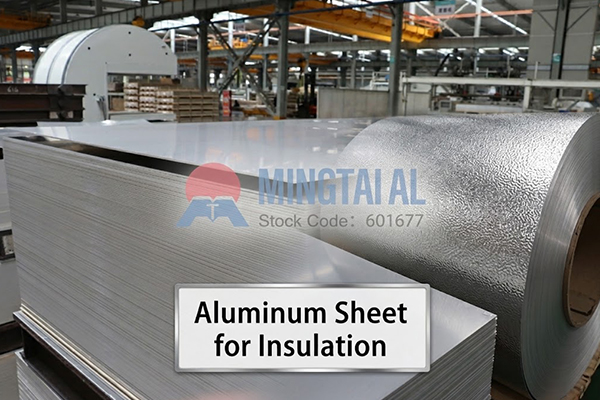
Selecting the right aluminum sheet for insulation often starts with one question: plain or stucco embossed? These two surface finishes each have their strengths, and there is no universal “best” option. The real deciding factors lie in your project environment—indoor or outdoor, exposure to physical impacts, and requirements for light reflection. Below we break down the differences across practical dimensions to help you identify the finish that better matches your specific working conditions.
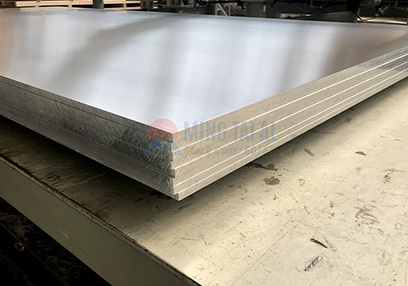
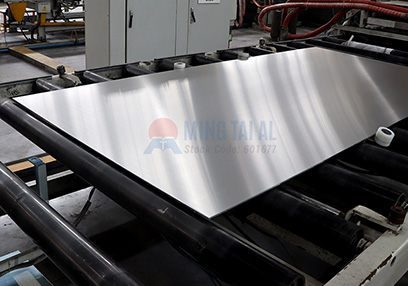
Plain aluminum sheet is the as-rolled surface—smooth, flat, with a bright metallic shine.
Advantages at a glance:
– Neat, modern appearance
– High reflectivity for heat and light
– Easy to clean, dust does not cling easily
‑ Cost‑effective due to simpler production
However, there are clear drawbacks:
– Scratches, fingerprints, and small dents become highly visible after handling and installation
– Mirror‑like glare can be problematic under strong sunlight
– If your site is near roads or windows, reflection may need extra consideration
Stucco embossed aluminum sheet is produced by passing the flat sheet through embossing rollers to create a fine orange‑peel texture. This textured surface acts as a natural “camouflage.”
Key benefits:
– Hides minor scratches and wear that occur during transport or installation
– Maintains a presentable appearance over years of service
– Diffuses sunlight into soft scattered light, greatly reducing glare
– Work hardening during embossing increases rigidity and resistance to bending
One point to note:
The extra embossing step makes it slightly more expensive than plain sheet. In return, you get lower maintenance needs and better long‑term aesthetics—often a worthwhile trade‑off.
|
Aspect |
Plain Aluminum Sheet |
Stucco Embossed Aluminum Shee |
|
Scratch resistance |
Scratches are obvious; requires careful handling |
Texture conceals most minor marks |
|
Light reflection |
Specular (mirror‑like), strong glare |
Diffuse, soft to the eyes |
|
Rigidity |
Standard |
Enhanced by work hardening |
|
Upkeep |
Needs regular cleaning to stay pristine |
Low maintenance, ages gracefully |
|
Cost |
Lower |
Slightly higher |
Lay out your site conditions clearly, and the choice becomes straightforward.
– The installation is indoors, in a clean environment with low impact risk
– Budget is a primary concern
– A modern, minimalist look is preferred
– High solar reflectance is required for thermal performance
– The project is outdoors, or the installation area has heavy foot traffic and equipment
– There is a high chance of accidental bumps, tool drops, or abrasion
– The site is near roads, glass facades, or residential zones—glare reduction is essential
– The sheet spans large areas or faces strong wind loads—extra rigidity helps
– You want the finished system to stay professional‑looking with minimal upkeep
Beyond surface finish, thickness and alloy grade are equally critical.
– Typical range for insulation jacketing is 0.3 mm to 1.2 mm
– Indoor piping often uses 0.3–0.5 mm, which is sufficient for general needs
– Outdoor or industrial equipment benefits from 0.6–0.8 mm for better impact and wind resistance
– 1060: High purity and excellent corrosion resistance—a common choice for pipe insulation
– 3003: Contains manganese for greater strength—suited for humid or high‑temperature‑differential environments
In an insulation system, the aluminum sheet for insulation serves as the outer cladding. It protects the underlying insulation material from mechanical damage, moisture ingress, and UV degradation—it is not the insulation itself. This role dictates that thickness and alloy should be selected primarily for protective performance.
Misunderstanding 1: “Embossed sheet is thicker than plain sheet.”
Embossing does not change the base thickness; it only adds a textured surface. Always specify the base metal thickness when ordering.
Misunderstanding 2: “Plain sheet cannot be used outdoors.”
Plain sheet is perfectly usable outdoors—but scratches will show more, and glare may be an issue. If those factors do not affect your project acceptance, plain sheet remains a viable choice.
So, plain or stucco? At its core, this is a trade‑off among project environment, durability requirements, and budget. For indoor, low‑abuse, cost‑sensitive jobs, plain sheet serves well. For outdoor, high‑wear, low‑maintenance needs, stucco embossed offers clear advantages. Neither finish fits every case—the key is to match the finish to your actual conditions.
We supply aluminum coil and sheet in both plain and stucco embossed finishes, in alloys 1060 and 3003, with a full range of thicknesses. Mingtai Aluminum welcomes inquiries with your specific project specifications.
Q: Which is more expensive, plain or stucco embossed?
A: Stucco embossed is slightly higher due to the extra embossing step.
Q: What thickness is typical for insulation jacketing?
A: Common range is 0.3 mm to 1.2 mm—thinner for indoor, thicker for outdoor use.
Q: Does embossing really make the sheet stronger?
A: Yes, work hardening during embossing improves rigidity and bending resistance.
Q: Can I fix scratches on plain sheet?
A: If scratch risk is high, it is better to choose stucco embossed from the start.
Q: Which alloy is better for insulation cladding, 1060 or 3003?
A: Both are common; 1060 offers great corrosion resistance, while 3003 provides higher strength for harsh environments.