Stock code: 601677
Stock code: 601677
Aluminum sheet offers clear advantages for roofing: lightweight, corrosion-resistant, easy to fabricate, and recyclable. The real decision is which type of bare and coated aluminum sheet for roofing to choose—bare or coated. It is not about which one is better, but which one fits your project.
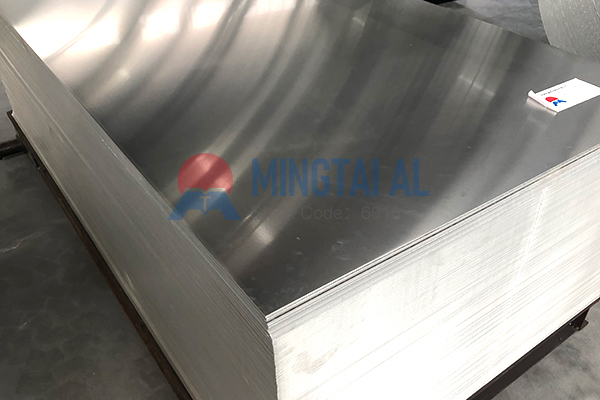
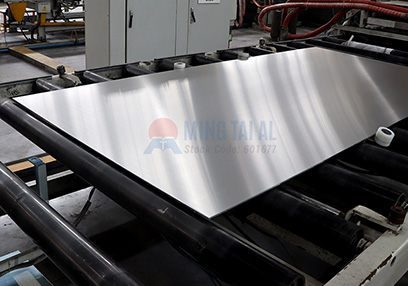
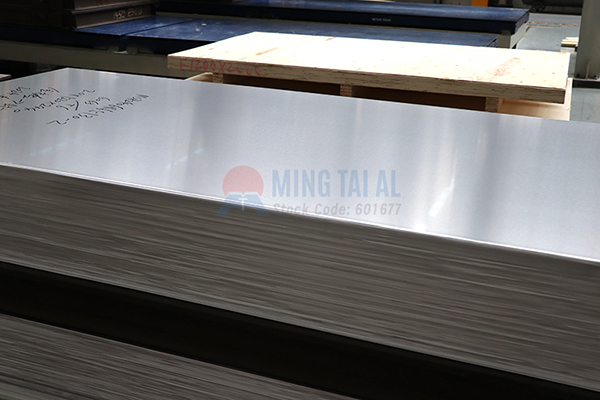
No organic coating after rolling. Natural metallic finish. Relies mainly on aluminum’s own oxide layer for corrosion resistance.
– Straightforward cost
– Flexible fabrication
– Simple cleaning maintenance
– Suits industrial plants, warehouse roofs, temporary structures, and other applications where appearance is not critical
In highly corrosive environments or where color matters, bare sheet needs more careful evaluation.
Organic coating pre-applied over the aluminum base. Common types include polyester, PVDF, and others. It is not just about looks; the coating adds a barrier that helps resist UV, salt spray, and acid rain, while keeping color and gloss more stable.
For residential, commercial, coastal, and high-UV projects, coated sheet is often preferred. Keep in mind that coating, coil coating, and other surface treatment steps are usually done by specialized coating lines, separate from aluminum base sheet supply.
To choose, ask three questions:
1. Does the roof shape the building’s appearance?
2. Is the environment harsh?
3. Is there budget for long-term maintenance?
The more you answer yes, the more coated sheet deserves consideration. The more the project is functional, short-term, or cost-driven, the more direct bare sheet becomes.
– Bare sheet: resists corrosion in most atmospheric environments; its oxide layer can self-repair.
– Coated sheet: adds a barrier; appearance stays more stable in coastal, high-salt, and high-UV areas.
– Bare sheet: natural metallic silver finish; suits functional roofs.
– Coated sheet: more color options; easier to match architectural style and maintain a consistent look.
– Bare aluminum: reflects solar radiation, but emissivity is limited.
– Light-colored coatings: can improve heat radiation performance, which is helpful in hot climates.
– Bare sheet: lower initial cost; mainly needs cleaning later.
– Coated sheet: higher upfront cost; quality coatings require less maintenance.
– Full life cycle: coated sheet may be more cost-effective.
– Tight budget and low appearance demands: bare sheet is more direct.
– Aluminum is relatively soft, so hail can cause dents.
– Coating does not change aluminum’s mechanical properties, but it protects the surface.
– In hail-prone areas, pay attention to alloy, thickness, and roof structure.
There is no single answer. Put the project conditions into the picture, and the choice becomes clearer.
– Industrial plants, warehouses, temporary buildings: low appearance requirements, budget and schedule priority—bare sheet is often more suitable.
– Residential, commercial, and public buildings: the roof affects the overall look, so coated sheet is often more suitable.
– Coastal, high-salt, high-UV areas: give priority to coated sheet.
– Hail-prone areas: whether bare or coated, focus on alloy, thickness, and roof structure.
– Budget-sensitive, short-term use: bare sheet is more direct.
– Looking for low full-life maintenance: a quality coated sheet is worth considering.
If the project requires both appearance and durability, and you are unsure which coating type to use, clarify the service environment first, then discuss alloy and coating options with your supplier.
1. Base metal certificates: alloy, temper, and mechanical properties.
2. Coating information: type, adhesion, and weather resistance details.
3. Alloy selection: 3003, 3004, and 3105 are common for roofing, balancing corrosion resistance and formability.
4. Specification match: thickness, width, and roof system requirements.
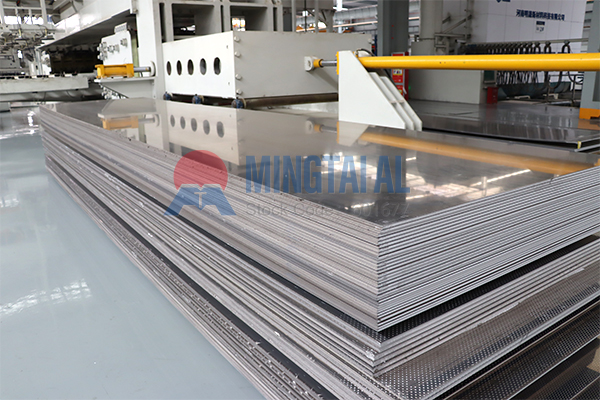
5. Delivery and packaging: avoid scratches and moisture during transport.
Bare sheet wins on simplicity, directness, and lower cost. Coated sheet wins on appearance, weather resistance, and long-term looks. Choosing between bare and coated aluminum sheet for roofing is ultimately a project-specific decision. Put project environment, appearance needs, budget, and maintenance expectations together, and the answer becomes clearer.
If you are sourcing aluminum base sheet for roofing, Mingtai Aluminum supplies 3003, 3004, and 3105 aluminum base sheets with a wide range of specifications and stable delivery. Contact us to discuss a suitable solution.
Q: Does bare aluminum roofing corrode easily?
A: Aluminum forms a natural oxide layer and resists corrosion in most environments, but coated sheet keeps its appearance longer in harsh conditions.
Q: Is PVDF always better than polyester?
A: PVDF usually offers better weather and color retention, but it costs more, so the choice depends on budget and appearance needs.
Q: Can bare sheet be painted later?
A: Yes, but it requires professional surface preparation, which is a field or specialist coating step, not factory pre-coating.
Q: Which alloys are common for aluminum roofing sheet?
A: 3003, 3004, and 3105 aluminum-manganese alloys are common, offering a balance of corrosion resistance and formability.