Stock code: 601677
Stock code: 601677
When you search for a bulk aluminum plate supplier, what are you really looking for? Not a endless directory of names, but a partner who can nail your specs, guarantee quality, quote fairly, and deliver on time. Bulk orders often run dozens of tons per shipment – the wrong alloy can scrap an entire batch, and the wrong partner can stall your production. This guide walks you through the key decisions you need to make, from your very first inquiry to the final delivery.
The biggest trap in bulk buying is describing your requirement vaguely. Saying “I need harder aluminum” leaves too much room for error – and what arrives may not fit your process at all.
Different alloy series serve very different purposes:
– 1xxx series (1050, 1060, etc.) – high purity and formability, ideal for decorative sheets, electrical parts, and heat sinks
– 3xxx series (3003, etc.) – good corrosion resistance, commonly used in HVAC, automotive interiors, and packaging
– 5xxx series (5052, 5083, etc.) – high strength, excellent weldability and corrosion resistance, suited for marine, tankers, and offshore structures
– 6xxx series (6061, 6063, etc.) – balanced strength and machinability, widely used in structural components, molds, and automotive frames
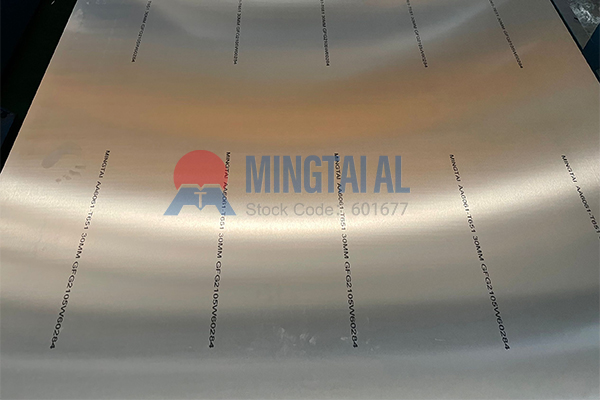
Within the same alloy, the temper (condition) changes performance significantly. For 6061: O-temper (annealed) has the lowest strength and is best for deep drawing; T6 offers good strength at a reasonable cost; T651 has reduced internal stress, making it ideal for large flat panels. Always specify both the alloy and temper on your purchase order – for example, AA3003‑H14 or AA5052‑H32.
Thickness, width, and length also matter directly to your equipment. A professional supplier can usually offer a wide range – from thin foil to extra-thick plates – but you need to confirm your required dimensions upfront.
A low price can be tempting, but the cost of a failed bulk order far outweighs any initial saving. Here is what you should check before signing:
– Certifications and test reports – Look for ISO 9001, IATF 16949 (automotive), or AS9100D (aerospace) where applicable. If your plates are for ships or pressure vessels, verify that the supplier holds classification society approvals such as CCS, ABS, BV, LR, More importantly, every shipment should come with a Mill Test Certificate (MTC) that clearly shows chemical composition and mechanical properties.
– Production capacity and stock availability – Ask about their regular inventory and maximum output. A supplier running near full capacity may struggle to meet your repeat orders on time.
– Export experience and logistics – Cross‑border shipments can get stuck at customs if the supplier is not familiar with Incoterms (FOB, CIF, etc.) or lacks trusted freight partners. An AEO (Authorized Economic Operator) certification is a strong sign that they handle customs clearance smoothly.
When evaluating a bulk aluminum plate supplier, always request references or case studies of similar orders – this tells you more than any brochure.
The quoted price is never a single number – it is built from several layers:
– Raw material cost – fluctuates with LME aluminium prices; this is the base component
– Processing cost – varies by alloy, thickness, and required precision; tighter tolerances cost more
– Order volume – full container load (FCL) orders usually get better per‑ton rates than less‑than‑container loads
– Custom specifications – non‑standard sizes or special tempers may require dedicated rolling schedules, which affect both lead time and cost
– Trade terms – FOB, CIF shift different cost burdens (freight, insurance, duties) between you and the supplier
A trustworthy supplier will break down these components for you, rather than giving a single lump-sum quote. That transparency helps you compare offers fairly and avoid unexpected charges.
Shipping heavy aluminium plates is nothing like sending a parcel. Heavy‑cargo logistics need special attention:
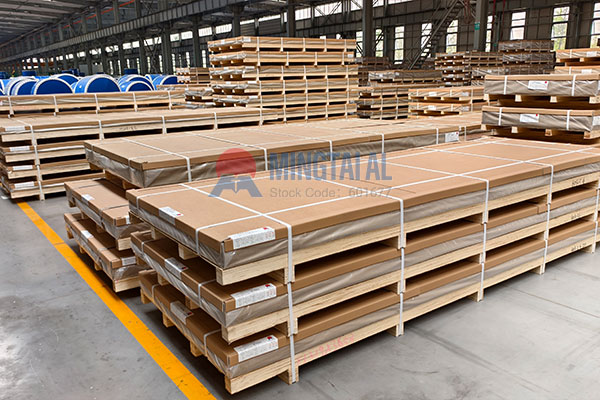
– Packaging and protection – Aluminium surfaces are soft and prone to scratching or oxidation. Check that the supplier uses edge protectors, soft slings, and moisture‑proof wrapping for sea freight. Poor packaging can ruin the surface quality before the plates even reach your workshop.
– Lead time commitment – Stock items may ship in days, while custom‑rolled orders can take weeks or months. Always get a confirmed “latest shipment date” in the contract, with clear penalties for delays.
– Incoterms and risk transfer – Who covers insurance? Who handles import clearance? Spell out every responsibility in writing before you pay, so there are no surprises when the cargo arrives at port.
Choosing the right partner makes all the difference in bulk aluminium procurement. Every step – from specification and vetting to pricing and logistics – deserves your careful attention.
Mingtai Aluminum has been in the aluminium processing industry for decades, offering the full 1‑8 series alloy range, multiple classification society approvals, and AEO certification. We are committed to transparent pricing and reliable delivery as your long‑term partner for bulk plate orders.
Q: What is the typical MOQ for a bulk aluminum plate order?
A: It varies by supplier, but most require several tons per order; full container loads usually secure better unit pricing.
Q: How can I verify that the alloy grade matches what I ordered?
A: Request the Mill Test Certificate (MTC) with each shipment and specify the ASTM or EN standard grade in your contract.
Q: What is the difference between aluminium plate and aluminium coil?
A: Plate is flat sheet form, coil is rolled into a roll – they have the same material but different shapes, so choose based on your cutting or stamping equipment.