Stock code: 601677
Stock code: 601677
Constant salt spray, high humidity, and relentless wave impact – these are the real tests for any material.
Corrosion resistance, strength, and long‑term reliability are non‑negotiable.
The 5xxx series (aluminium‑magnesium) alloys have become the backbone of modern shipbuilding, thanks to their excellent strength‑to‑weight ratio, seawater corrosion resistance, and weldability.
Among the many grades, 5083, 5086, and 5456 are the three most frequently used for hull structures.
This article compares these marine aluminum alloys from three angles: performance traits, typical uses, and critical cautions.
– Magnesium is the main alloying element. Strength comes from solid‑solution hardening and cold working – these alloys are not heat‑treatable.
– Magnesium forms a dense, stable oxide film on the surface, which effectively resists seawater, salt fog, and chloride attack.
– Unlike some 6xxx alloys (which can suffer intergranular corrosion in seawater), the 5xxx series has a natural advantage in marine environments.
– For marine service, always prefer H116 or H321 temper – these are specially stabilised conditions that greatly improve resistance to stress‑corrosion cracking.
– ASTM B928 is the dedicated standard for marine products made from high‑magnesium alloys like 5083, 5086, and 5456. It requires passing exfoliation corrosion and intergranular corrosion tests.
5083 contains 4.0–4.9% magnesium. It is one of the strongest non‑heat‑treatable alloys in the 5xxx series.
Key advantages:
– Outstanding resistance to seawater corrosion, performing well even in industrial chemical environments.
– Excellent weldability – welded joints retain good strength.
– Good low‑temperature toughness, maintaining performance in extreme cold.
– Explicitly covered by ASTM B928 for marine certification.
Typical uses: hull plating, decks, superstructures, major structural members.
Caution: Because its magnesium content exceeds 3.5%, 5083 can be susceptible to stress‑corrosion cracking under certain conditions (temperatures above 65°C and sustained stress). Always choose H116 or H321 temper.
5086 contains 3.5–4.5% magnesium. Its weldability and corrosion resistance are comparable to 5083, but its strength is slightly lower and its extrudability is better.
Key advantages:
– Excellent seawater corrosion resistance – significantly outperforms ordinary aluminium in salt spray tests.
– Slightly better resistance to stress‑corrosion cracking than 5083.
– Better formability than 5083 – can be cold‑bent, stamped, and shaped more easily.
– Compatible with MIG, TIG, and other welding processes.
Typical uses: decks, gangways, fittings, offshore platform components, pressure vessels.
Overall position: 5086‑H116 is often preferred over 5456‑H116 for the same application, because its lower magnesium content reduces the risk of problems during fabrication and service. For a good balance of performance and cost, 5086 is an ideal choice.
5456 has the highest magnesium content among these three (about 5.1%). Common tempers are O and H321.
Key advantages:
– Higher strength than 5083 and 5086 – superior load‑bearing capacity.
– Excellent seawater corrosion resistance.
– Good weldability and toughness.
Typical uses: heavy hull structures, marine storage tanks, high‑strength structural parts.
Important reminder: Higher magnesium brings higher strength, but also greater sensitivity to stress‑corrosion cracking. 5456‑H116 requires careful control of operating conditions in seawater. When using 5456, strict temper selection and corrosion‑protection design are essential.
|
Aspect |
5083 |
5086 |
5456 |
|
Magnesium content |
4.0–4.9% |
3.5–4.5% |
~5.1% |
|
Strength level |
High |
Medium |
Highest |
|
Seawater corrosion resistance |
Excellent |
Excellent |
Excellent |
|
Stress‑corrosion cracking resistance |
Good |
Better |
Requires careful control |
|
Weldability |
Excellent |
Excellent |
Good |
|
Formability |
Good |
Better than 5083 |
Fair |
|
Typical applications |
Hull plating, main structure |
Decks, platform components |
Heavy structures, tanks |
– Highest strength and broadest acceptance → choose 5083 (the industry standard for hulls).
– Best overall balance of performance and cost → choose 5086.
– Ultimate strength for heavy‑duty structures → choose 5456 (but with rigorous corrosion management).
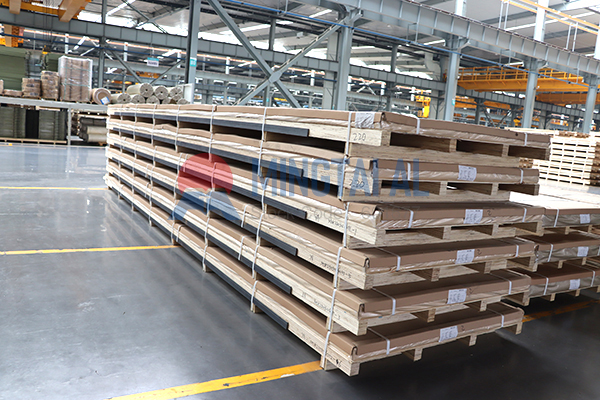
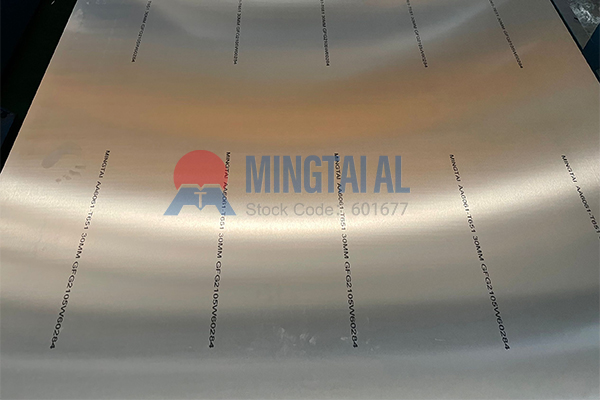
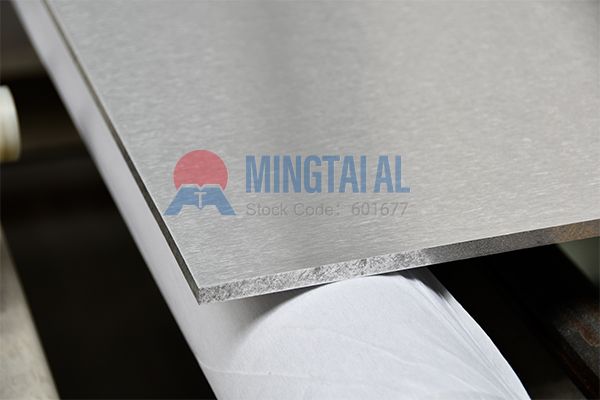
For any of these alloys, H116 or H321 temper is the key to long‑term reliability in marine service. Mingtai Aluminum supplies 5083, 5086, and 5456 plates and coils that meet ASTM and classification society requirements. These marine aluminum alloys are available in the recommended tempers.
Q1: What is the main difference between 5083, 5086, and 5456?
A: Their magnesium content – 5456 has the highest (~5.1%) and thus the highest strength but also the highest stress‑corrosion sensitivity; 5083 (4.0–4.9%) is the most balanced standard; 5086 (3.5–4.5%) has slightly lower strength but better formability and SCC resistance.
Q2: Which temper should be used for marine aluminium plates?
A: Always choose H116 or H321 – these are specially designed for marine certification and greatly improve resistance to stress‑corrosion cracking.
Q3: Which is better for a ship’s deck – 5086 or 5083?
A: Both work well; 5083 is stronger for heavy‑load areas, while 5086 offers better formability for curved decks and is more cost‑effective.
Q4: Is 5456 really stronger than 5083?
A: Yes – 5456 has the highest magnesium content and delivers higher strength than both 5083 and 5086.
Q5: Can these three alloys be welded directly?
A: Yes – all have good weldability, with MIG and TIG being the recommended processes.