Stock code: 601677
Stock code: 601677
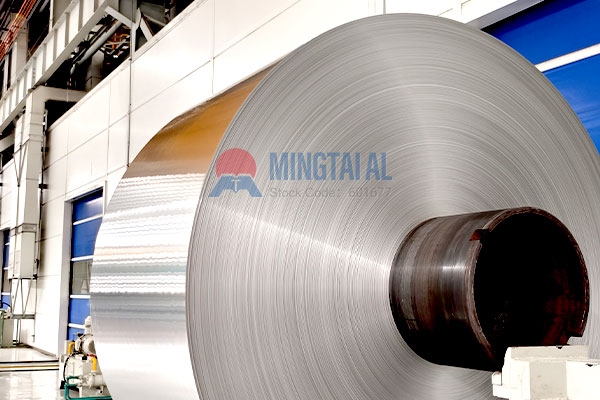
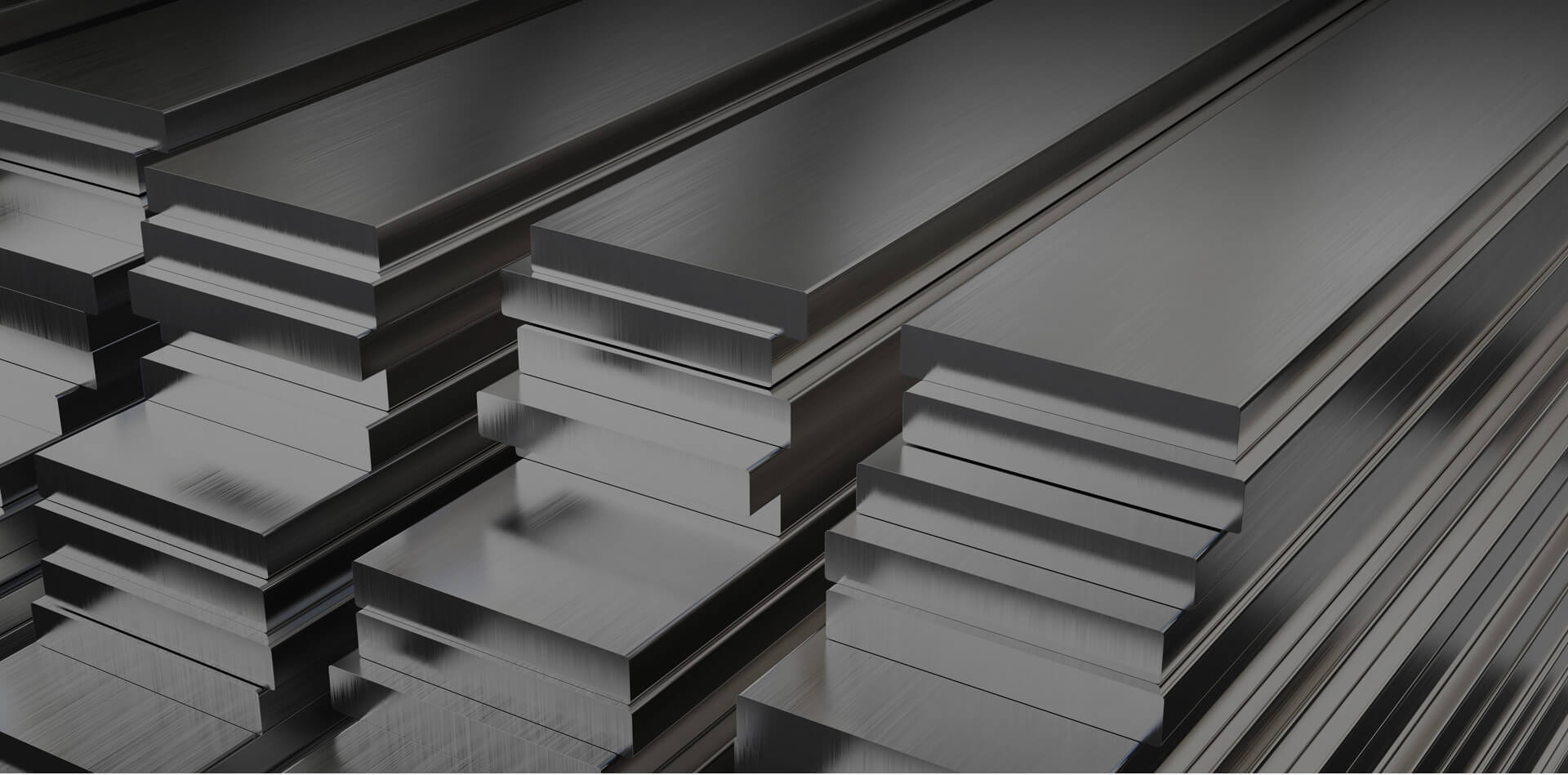
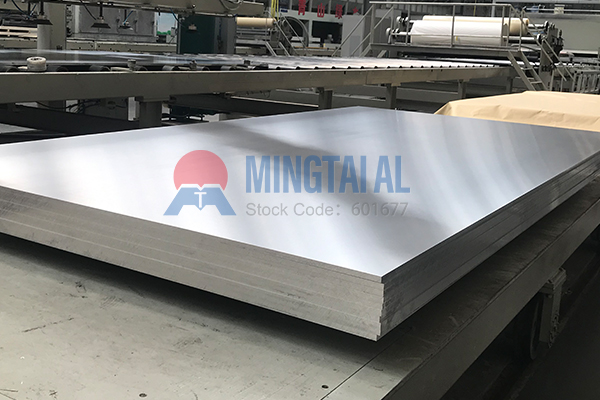
Mill finish aluminum refers to the raw state of aluminum after rolling or extrusion, without any secondary surface treatment. The surface has a matte silver‑gray appearance with uniform rolling or extrusion marks — these are normal process characteristics, not defects. Aluminum naturally forms a thin oxide film when exposed to air, which provides basic protection. However, it is important to note that this natural oxide layer does not equate to engineered corrosion protection.
This article focuses on the product characteristics and application value of this material — it does not cover surface treatment or further processing, which are typically done downstream according to specific needs.
– Cost‑effectiveness – Eliminating anodizing, powder coating, or other secondary processes makes this the most economical aluminium option. For projects with tight budgets or those requiring further fabrication, it delivers significant savings.
– Excellent workability – The material retains all mechanical properties, including tensile strength, ductility, and machinability. It is easy to bend, cut, weld, and stamp, making it suitable for applications that need additional forming.
– Superior thermal and electrical conductivity – Without a coating layer to insulate, the surface allows excellent heat dissipation and electrical conduction. This is why it is a preferred choice for heat sinks, LED substrates, and electrical grounding components.
– Lightweight and strong – The inherent high strength‑to‑weight ratio of aluminium is fully preserved. Industries such as transportation, aerospace, and automotive lightweighting benefit greatly.
– Recyclable and environmentally friendly – Aluminium is 100% recyclable, and the mill finish state simplifies recycling by eliminating the need to separate coatings.
This is often the most critical decision in material selection. Here is a quick comparison:
|
Aspect |
Mill Finish |
Anodized |
Powder Coated |
|
Appearance |
Matte silver‑gray with natural marks |
Uniform metallic luster, colorable |
Rich colors, smooth surface |
|
Corrosion resistance |
Basic (natural oxide) |
Excellent (thickened oxide) |
Excellent (coating protection) |
|
Surface hardness |
Lower |
Higher |
Depends on coating quality |
|
Cost |
Lowest |
Moderate |
Higher |
|
Best for |
Hidden structures, further processing |
Exposed parts, high weather resistance |
Aesthetic requirements, brand colors |
– When the aluminium will be used in concealed areas (internal structures, hidden components)
– When subsequent welding, painting, or anodizing is planned
– When budget is a primary concern
– When thermal or electrical conductivity is important
– When the final product is exposed and appearance matters
– When operating in highly corrosive environments like coastal or chemical plants
– When strict colour consistency between batches is required
The uses are broader than many assume:
– Building and construction – Curtain wall frames, window and door frame internals, roof underlayment. Since these are hidden, surface treatment is unnecessary.
– Industrial manufacturing – Equipment parts, machine frames, jigs, conveyor rails. Functionality takes priority over appearance.
– Transportation – Truck panels, trailer components, marine interior structures. Lightweighting and cost control are key drivers.
– Electronics and electrical – LED heat sink bases, power modules, electrical grounding bars. Thermal and electrical performance are critical.
– HVAC and refrigeration – Heat exchanger fins, insulation casings for piping. Good formability and low cost.
– Signage and packaging – Sign substrates, industrial packaging materials. These are usually printed or laminated later.
– Manage expectations – Minor rolling marks, extrusion lines, or batch‑to‑batch colour variations are normal. Discuss acceptable surface standards with the supplier before ordering.
– Protect from damage – Without a protective coating, the surface is more vulnerable to scratches and contamination. Store indoors, keep original packaging until use, and wear clean gloves during handling.
– Watch out for moisture – While aluminium does not “rust” like steel, prolonged exposure to damp conditions may cause water stains or accelerated oxidation. Pay extra attention to packaging for sea freight or long‑term storage.
The core value of mill finish aluminium lies in its cost‑effectiveness, excellent workability, and functional performance. It is not a “low‑end” option but a smart choice when matched with the right application.
As a professional aluminium manufacturer, Henan Mingtai Aluminum offers a full range of alloy grades in mill finish sheets and coils, with stable quality and flexible delivery to serve industrial needs worldwide.
Q: Does mill finish aluminium rust?
A: Aluminium does not rust like steel, but without additional protection, it may oxidise or corrode in humid or salty environments, so it is not suitable for prolonged outdoor exposure.
Q: Which is cheaper, mill finish or anodized aluminium?
A: Mill finish is significantly cheaper because it skips the anodizing process — it is the most cost‑effective option.
Q: Are surface marks and colour variations on mill finish aluminium defects?
A: No — these are normal characteristics of the rolling or extrusion process and do not affect strength or performance.
Q: Can mill finish aluminium be painted or anodized later?
A: Absolutely — it is an ideal substrate for downstream finishing processes and can be further treated as needed.